
Do You Need Tubeless Tires to Ride the Katy Trail?


Tubeless Tires to Ride the Katy Trail
You’re getting the bike ready for the Katy when someone warns you:
“Watch out for the thorns. You should go tubeless.”
Now you’re staring at tires that have been fine for years and wondering if they have to come off before Missouri.
No. You do not need tubeless tires to ride the Katy Trail.
Plenty of people do the whole corridor on regular tubes. Others swear by tubeless. Both work.
What matters more: tires that aren’t worn out, and a plan for a flat. Flats happen out here. They are not a guaranteed part of the trip.
Are thorns really a problem?
They can be. Not as much as some first-timers fear.
Talk to enough riders and you’ll hear opposite stories. Hundreds of miles, no puncture.
One thorn, one flat. Flats from glass, wire, or a worn casing that had nothing to do with plants.
That’s cycling.
The Katy is not the desert Southwest, where goatheads are a daily tax. Don’t start the trip assuming your tires are doomed. Do start it able to fix a puncture.
Those are different things.
What about goatheads?
Goatheads—puncturevine—make hard, sharp burs that can go through a tire. Riders mention them along parts of the corridor, including around Rhineland.
That does not mean everyone who passes Rhineland gets a flat. It does mean a good habit:
Stay on the traveled surface. Don’t wander into the weeds.
Thorny stuff can show up more after mowing, when cuttings sit on the edge of the trail.
There’s no prize for riding through that. Stay on the clear line.
Tubes vs. tubeless
Ask ten cyclists. Get twelve answers.
Tubes
The system most people already know. Flat happens: wheel off, tube out or patched, inspect the tire for whatever caused it, new tube in, inflate, go.
Cheap. Familiar. Fine for the Katy.
The lesson that saves an afternoon: find what caused the first hole before you put the spare in. A thorn still sitting in the casing will flatten the next tube immediately.
Tubeless
No inner tube. Sealant inside the tire. Small holes can seal before you notice. That’s useful when the next town is a ways off.
If you already ride tubeless, keep riding tubeless. It isn’t magic. Big cuts may need a plug.
A torn sidewall is still a torn sidewall. A lot of tubeless tourists still carry a spare tube as the last backup.
Don’t change the whole bike the night before
If you’ve ridden thousands of miles on tubes and never set up tubeless, the night before you leave for Missouri is a poor classroom.
Every setup has quirks. Find them in the driveway, not between two little towns with the bike upside down in the limestone.
Want to switch? Good. Learn it. Ride it. Practice the ugly parts. Then tour on it.
You do not have to convert because you’re riding the Katy.
The tire itself matters more than what’s inside it
Before a multi-day trip, look at the rubber.
Worn? Cracked? Dry? Paper-thin? Sitting in a garage for years?
If you’re not sure it has a few hundred miles left, replace the tire. That’s a better use of money than arguing tubes vs. sealant.
Some people like thicker touring rubber. Some run gravel tires, hybrids, mountain bikes.
A few experienced riders have done the Katy on road bikes. There is no official Katy tire.
Best setup: right for crushed limestone, in good shape, and familiar to you.
The thing that actually matters: you can fix your own flat
Parts of this trail are remote. The puncture will not wait for a bike shop. Cell service and a shuttle should not be Plan A.
Carry at least:
One spare tube that fits—two is better
Tire levers
A patch kit
A pump or inflator that actually works
Tools to get your wheel off
Whatever your system needs (tubeless plugs, and still a tube)
You don’t need a shop in a saddlebag. You need enough to finish the day.
Practice at home
This is the best advice in the piece.
Change a tube before you leave. Don’t only watch a video. Do it.
Wheel off. Tire off. Tube out. Everything back. Inflate it.
Then you know whether that mini-pump works, whether the levers fit, whether the spare is the right size, and whether your wheel has a weird trick to it.
Better in the garage than beside the Katy.
Don’t let tire anxiety eat the trip
Online threads do this to people.
“How common are flats?” “Never had one.” “I got three.” “Go tubeless.” “Don’t bother.”
Pretty soon a first-timer thinks the trail is a minefield.
It isn’t. A flat is a normal bicycle problem. Prepare for it. Then stop rehearsing it.
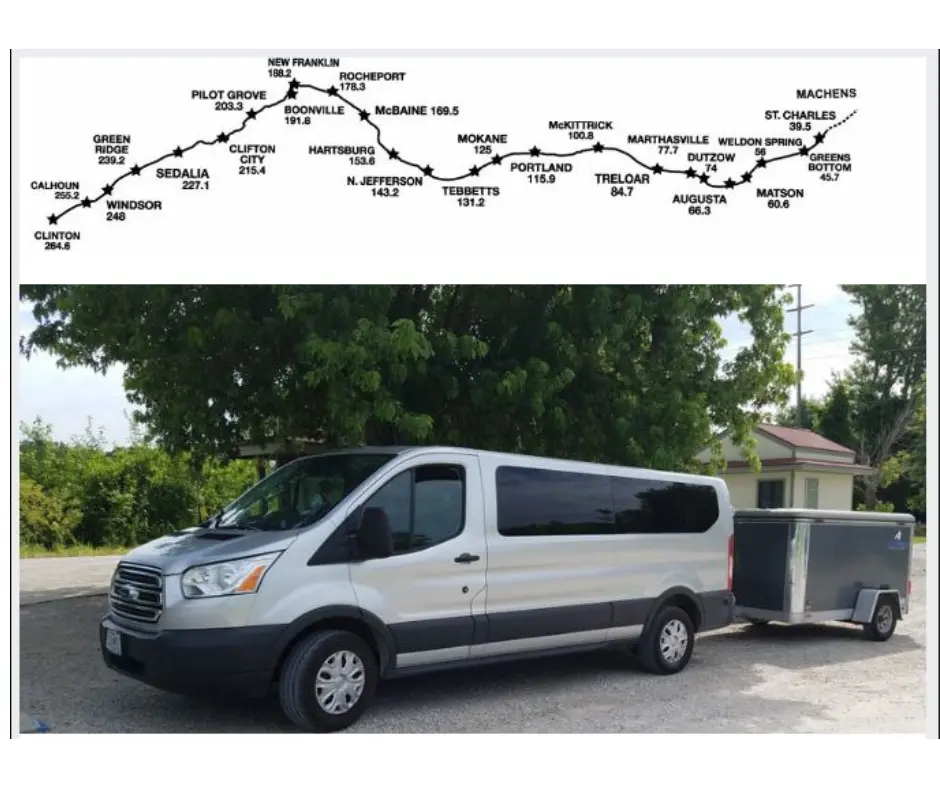
Coming through McKittrick?
If the route comes through the Hermann stretch, you ride through our town.
The Mercantile sits at Mile Marker 100.8, next to the trailhead. We host day-riders and people crossing the state.
After a few days on limestone, the simple things land: a hot shower, a washer and dryer, a kitchen, a real bed, a locked place for the bike, a hose for the dust, an outlet for the e-bike.
Ordinary at home. Wonderful after you pedaled here.
So—should you go tubeless?
If you already ride it and like it, bring it.If you ride tubes and trust them, keep the tubes.
Check the tires. Carry a repair kit. Know how to use it. Stay out of the cut weeds.
Then go ride the river, the bluffs, the railroad towns, and the miles.
Remember those—not the three weeks you spent worrying about sealant.
See you at Mile 100.8.
FAQ
Do I need tubeless tires on the Katy Trail?
No. Standard tubes are fine if the tires are sound and you can fix a flat.
Are there goat-heads on the Katy Trail?
Riders report puncture-vine in places, including around Rhineland. Stay on the packed surface and avoid mowed debris on the edges.
What should I carry for flats?
Spare tube(s), levers, patches, a working pump, wheel tools—plus plugs if you’re tubeless.


Comments